
Can natural food colour manufacturers support both powder and liquid formats
Can natural food colour manufacturers support both powder and liquid formats
标签arcclick报错:缺少属性 aid 值。Consumers today expect clean labels, and natural food colours have moved from a niche preference to a mainstream requirement. Yet when a brand begins developing a new product, one of the first practical questions that comes up is whether natural food colour manufacturers can support both powder and liquid formats. The short answer is yes, but only when the supplier has the right extraction, processing and formulation capabilities in place. This article explains why format flexibility matters, what sets each format apart, and what to look for when choosing a partner.
Why format flexibility matters
Different food and beverage applications simply need different delivery systems. A ready-to-drink beverage or a syrup calls for a liquid colour that disperses instantly, while a dry mix, a tablet or a baked good is far easier to colour with a powder. If a manufacturer can supply both, brands avoid the hassle of juggling multiple suppliers for the same pigment family, keep their inventory simpler, and can move a formula from one product line to another without re-qualifying a new vendor.
That flexibility also matters during product development. A brand may launch a powder-based supplement first and later extend the same shade into a liquid functional beverage. Working with a single supplier that offers both formats makes that transition smooth and keeps the colour consistent from one launch to the next.
Powder formats: built for dry applications
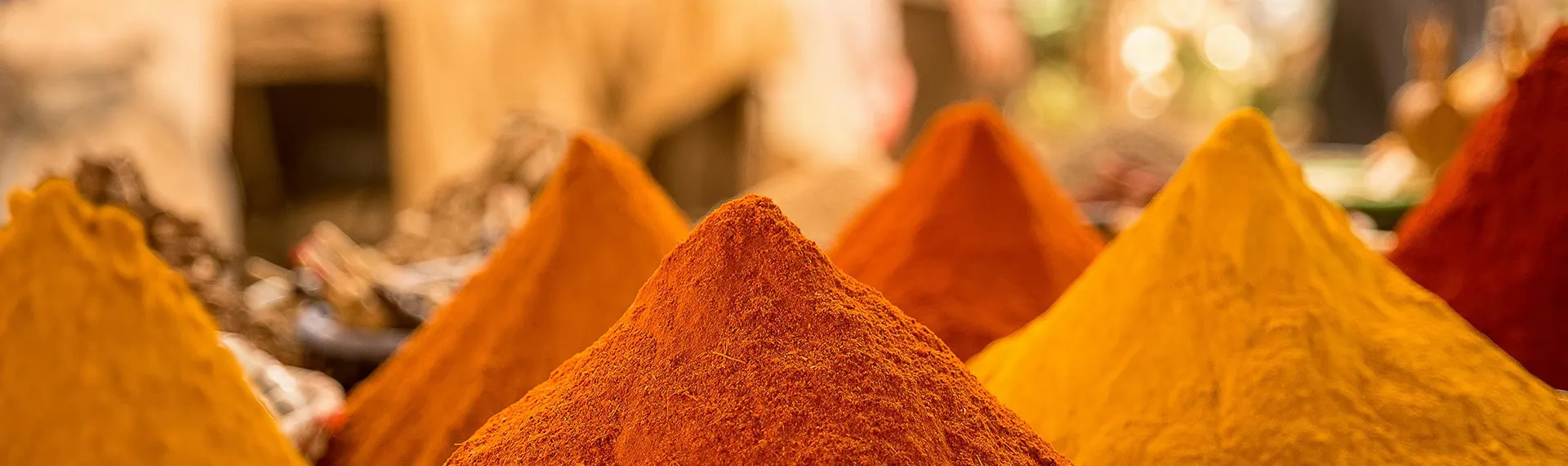
Powdered colours are produced by concentrating and then drying the extract, usually through spray drying, until it becomes a fine, free-flowing powder. They are the natural choice for dry beverage mixes, tablets, capsules, bakery products, confectionery and seasoning blends. Powders offer a long shelf life, compact storage and lower shipping weight, which keeps logistics costs down. They also allow precise dosing by weight, which matters in high-volume production.
Common examples in this category include beetroot red, anthocyanins, gardenia yellow, spirulina blue and vegetable carbon black. Each delivers a vivid, stable shade while keeping the label clean and recognisable.
Liquid formats: built for beverages and sauces
Liquid colours come as concentrated solutions or dispersions that blend into water- or oil-based systems with minimal effort. They are ideal for beverages, syrups, sauces, dairy products and confectionery coatings where instant, even dispersion is essential. Liquids are easy to meter into continuous production lines, and they avoid the dust and rehydration steps that powders sometimes bring.
Oleoresins such as paprika oleoresin and oil-soluble beta-carotene are classic liquid options for fat-based foods like margarine, dressings and processed cheese, while water-soluble liquid concentrates suit clear drinks and fruit preparations.
What to look for in a manufacturer
Not every supplier can genuinely deliver both formats at commercial scale. Before committing, check a few things. First, the extraction technology: water, alcohol and supercritical CO2 extraction each suit different pigments, and a supplier that masters all three can tailor the process to the raw material. Second, standardisation, because a natural colour is only useful if the shade and strength stay consistent from batch to batch. Third, quality control, including raw material authentication, in-process monitoring, active compound verification and microbial testing. Finally, consider whether the manufacturer offers OEM and private label support, so you can scale from sample to shelf under your own brand.
How Botaniex supports both formats
Botaniex is a botanical extract manufacturer and supplier based in Changsha, China, with a product catalogue of more than 150 extracts spanning herbal powders, mushroom extracts and natural food colours. Its natural colour range covers both formats: powder options such as beetroot red, anthocyanins, black rice red, cabbage red, gardenia yellow, safflower yellow, spirulina blue and vegetable carbon black, alongside liquid-friendly ingredients such as paprika oleoresin and beta-carotene. This breadth means a single partner can supply the same pigment family in the form your recipe actually needs.
Behind that range sits a science-driven R&D team of PhDs, professors and researchers in phytochemistry, pharmacology and traditional Chinese medicine, supported by advanced extraction lines and a global sourcing network with botanical authentication and sustainability checks. Quality control runs from raw material authentication through in-process monitoring to active compound verification and microbial testing, so every batch meets the same standard whether it ships as a powder or a liquid.
Choosing the right format for your product
As a general rule, start with the application. If your product is a dry mix, a supplement or a bakery item, a powder will handle better and store longer. If it is a beverage, a syrup or a sauce, a liquid will disperse faster and dose more cleanly. For fat-based foods, look for oil-soluble liquid options. And if you are unsure, a good supplier will run trials with your actual formula, because pH, heat, light and the other ingredients in your recipe all influence how a natural colour behaves.
So yes, natural food colour manufacturers can support both powder and liquid formats, and the best ones treat that flexibility as a core capability rather than an afterthought. Whether you are sourcing botanical extracts for a new supplement or looking for botanical extracts for food and beverage colouring, a partner that offers both formats, backed by solid R&D and quality control, gives your product line room to grow.
